NAV
189.86p
as at 16/11/2026


The fund is managed by Georges Lequime and Mark Smith who boast decades of experience investing in mining companies and many years of operational experience in mining and geology.


An ‘Evergreen’ solution for investors to access this dynamic asset class
If you can’t grow it, it has to be mined!
A fierce geopolitical and commercial race to secure critical minerals
Investment Opportunities
Each metal has its own cycle. The managers aim to provide actively managed exposure ‘through the cycle’ and will look to determine the optimum combination of precious, speciality and base metals at any given time, in keeping with the transition to clean energy, electric vehicles and other long-term structural growth themes – taking account of the over-arching macro-economic and political risks and commodity price movements, as well as the specific circumstances of individual companies.


Source: US Global Investors
We focus on companies with strong technical teams as well as experience at the corporate level. Creating value ‘through the drill bit’ can be transformational for the value of a smaller company. The calibre of a company’s management and their ability to successfully execute a mining project from exploration to production phase are critical for de-risking a project. De-risking includes conducting extensive exploration work, arranging appropriate financing for different project stages, and lowering production costs.

The mining industry is often referred to as a ‘dirty’ industry. However, this overlooks the fact that all companies are not alike in this respect and that within the industry there are good examples of companies that have set high standards in environmental, social and governance matters.
Forward-thinking, ethically-run and well-managed companies understand that an ability to build and maintain good relations with workers, host nations and local communities goes hand-in-hand with building a world-class mining company and achieving long-term value.

Copper and Aluminium Transmission cables, transformers, substations, conductors, busbars and EV charging infrastructure.
Steel, Electrical Steel and Zinc Pylons, transformer cores, substations and corrosion protection.
Lead and Nickel Cable sheathing, backup power, alloys and battery components.
Silver, Tin and Rare Earth Elements Contacts, switches, solder, sensors, motors and smart grid equipment.

Copper and Aluminium Wind turbines, solar farms, cabling, inverters, transformers and transmission lines.
Steel and Zinc Wind towers, foundations, solar mounting systems and corrosion protection.
Silicon and Silver Solar cells and conductive pastes.
Rare Earth Elements Permanent magnets for wind turbine generators.
Nickel, Cobalt, Lithium and Graphite Battery storage and renewable power balancing.
Tellurium, Indium and Gallium Specialist thin-film solar technologies.

Lithium, Nickel, Cobalt, Manganese and Graphite Battery cathodes and anodes for energy storage, range, stability and performance.
Copper and Aluminium Batteries, motors, wiring, charging systems, casings and lightweight structures.
Rare Earth Elements Permanent magnets for electric motors.
Iron and Phosphorus Lithium iron phosphate batteries and lower-cost battery chemistries.
Steel and Silicon Vehicle structures, power electronics, semiconductors and advanced battery materials.
Platinum Group Metals Fuel cell electric vehicles and specialist electronics.

Copper Power cables, busbars, cooling systems and high-speed networks.
Aluminium and Steel Server racks, chassis, structures, heat sinks and supporting infrastructure.
Silicon Processors, memory chips and semiconductors.
Gold, Silver, Tin and Tantalum Connectors, solder, circuit boards and power-stabilising capacitors.
Gallium and Germanium Advanced semiconductors, fibre optics and high-speed data transmission.
Rare Earth Elements Magnets, cooling fans, motors and data storage.
Lithium, Nickel, Cobalt and Graphite Batteries, backup power and thermal management.

Silicon AI chips, processors, memory and semiconductors.
Copper, Gold and Silver Power infrastructure, interconnects, circuit boards, connectors and sensors.
Gallium, Germanium, Tantalum and Tungsten Advanced semiconductors, fibre optics, capacitors and chip manufacturing.
Rare Earth Elements Magnets, cooling fans, motors, sensors and specialist electronics.
Platinum Group Metals Capacitors, sensors and chip manufacturing.
Lithium, Cobalt, Nickel, Aluminium and Steel Batteries, backup power, server racks, cooling systems and data centre infrastructure.

Silicon Wafers and integrated circuits.
Copper, Gold and Silver Chip interconnects, wiring, bonding, connectors and circuit boards.
Gallium, Germanium and Indium Compound semiconductors, power electronics, RF chips, fibre optics and displays.
Tantalum, Tungsten and Cobalt Capacitors, diffusion barriers, chip contacts and advanced interconnects.
Rare Earth Elements Magnets, lasers, polishing materials and semiconductor manufacturing equipment.

Titanium, Aluminium and Steel Aircraft, vehicles, naval vessels, armour and structural components.
Tungsten Armour-piercing ammunition, counterweights and high-temperature components.
Silver, Gallium and Germanium Electronics, radar, guidance, thermal imaging and communications systems.
Cobalt and Graphite Superalloys, batteries and high-temperature applications.
Rare Earth Elements Magnets, radar, sonar, guidance systems and precision weaponry.
Platinum Group Metals and Lithium Sensors, fuel cells, portable equipment, drones and military vehicles.

Titanium, Aluminium and Magnesium Lightweight aircraft structures, airframes, landing gear and precision components.
Nickel, Cobalt, Chromium, Tungsten and Rhenium Jet engines, turbine blades, exhaust systems and high-temperature superalloys.
Rare Earth Elements Magnets, actuators, sensors, avionics and specialist aerospace systems.
Beryllium Satellite components, optical systems and lightweight precision structures.

Lithium, Cobalt and Graphite Smartphone batteries and energy storage.
Copper, Gold and Silver Wiring, connectors, circuit boards and reliable conductivity.
Indium and Tin Touchscreens and transparent conductive coatings.
Silicon and Tantalum Processors, memory chips, semiconductors and capacitors.
Rare Earth Elements Speakers, microphones, vibration units and displays.
Aluminium and Gallium Casings, frames, semiconductors and wireless communication systems.

Titanium, Stainless Steel and Cobalt-Chromium Alloys Implants, surgical instruments, orthopaedic devices and wear-resistant components.
Platinum Group Metals, Gold and Silver Pacemaker leads, electrodes, sensors, diagnostics, antimicrobial coatings and medical electronics.
Niobium, Tantalum and Magnesium MRI magnets, implants, surgical markers and bioresorbable devices.
Rare Earth Elements MRI contrast agents, magnets, imaging systems and specialist medical devices.

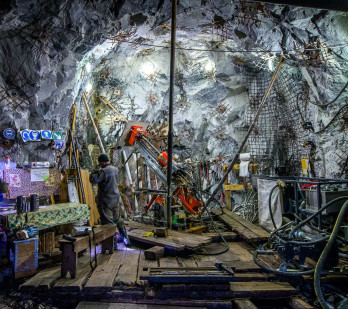
In mining, the most important insights are rarely found on a spreadsheet. For the WS Amati Strategic Metals Fund, site visits are a core part of the investment process, providing a level of understanding that simply can’t be replicated through desk-based analysis. It’s one thing to model a project; it’s another to stand on site, assess the geology, evaluate the team and identify risks or opportunities in real time.
This approach is particularly relevant in the small and mid-cap mining space, where valuation discrepancies are often the greatest and where detailed, technical due diligence can create a genuine edge.

A key framework guiding this approach is the Lassonde Curve, which describes the life cycle of a mining company from early exploration through to production.
The most attractive opportunities typically arise:
• After initial discovery excitement has faded;
• During the “orphan phase” of development and feasibility;
• Before full production, when risks are still perceived to be high.
This is the point where valuations are often most depressed but where the potential for value creation is greatest if the project is successfully developed.
Identifying those opportunities requires more than financial modelling. It requires understanding whether a project can actually be built and that’s where site visits become critical.

Visiting a mining project brings a number of insights that are difficult to capture from afar:
• Infrastructure and logistics – how feasible is it to build and operate in a remote location?;
• Operational quality – are the right systems, equipment and processes in place?;
• Management capability – does the team have the experience to deliver on time and on budget?;
• Workforce and culture – what is morale like on site and how is the operation run?;
• Environmental and social factors – is there a sustainable long-term licence to operate?
It also helps uncover what investors are actively trying to avoid: “fatal flaws”—issues that may not be visible in company presentations but can materially impact project viability.

A good example of this process in action is the investment in G Mining Ventures.
The company acquired the Tocantinsinho gold project in Brazil at a low valuation, during the development phase of the asset. A subsequent site visit provided confirmation that:
• The project was being executed effectively;
• The development team had a strong track record;
• There was additional exploration upside beyond the initial plan.
As the project moved into production and risk was reduced, the valuation re-rated significantly illustrating how value is created along the development curve.

Beyond operations, site visits also provide critical geological context.
In regions such as Guyana, for example, first-hand observation highlights the scale of opportunity. Despite sharing similar geology with highly productive regions such as West Africa, the area remains underexplored suggesting significant untapped potential.
By examining drill core, geological structures and regional trends in person, it becomes possible to:
• Validate company data and assumptions;
• Identify extensions to existing deposits;
• Spot overlooked exploration opportunities.
This combination of technical expertise and direct observation allows the team to build conviction—often ahead of broader market recognition.

Equally important is knowing when not to invest.
In several cases, site visits have revealed issues that were not apparent from initial analysis such as inconsistent resource quality, over-reliance on high-grade pockets, or operational challenges that would likely erode margins during production.
These insights can make the difference between a compelling investment and a value trap.

The WS Amati Strategic Metals Fund is deliberately focused on areas where this level of detailed research can add value particularly in mid-cap producers, developers and late-stage exploration companies.
By combining In-depth financial modelling, Technical expertise (geology and engineering) and Extensive on-the-ground research, the team aims to identify opportunities where upside is not yet fully reflected in market valuations.

Mining is a complex, capital-intensive industry where outcomes can vary widely.
In that environment, differentiated insight matters.
“Boots on the Ground” research is not just about visiting sites, it’s about building conviction, managing risk and identifying opportunities that others may overlook.
Ultimately, it’s one of the key ways in which durable investment edge is created.
Should you wish to receive our monthly fund factsheets by email, please register via our website.
For further information please speak to your financial adviser.
WS Amati Strategic Metals Fund has the following ratings:

For further information regarding the application form, please visit Waystone’s website here.
Key Information Documents to read before investing
The WS Amati Strategic Metals Fund is a global mining fund investing across precious metals, base metals, battery metals, uranium and other strategic and critical minerals. The fund is actively managed, allowing the managers to adjust exposure across different metals and segments of the mining market as valuations and investment opportunities change. Its portfolio typically combines established producers with selected development-stage mining companies where the managers believe there is significant potential for value creation.
The WS Amati Strategic Metals Fund takes an active approach rather than simply following the composition of a mining index. The managers look for high-quality producers with growth potential alongside selected development-stage opportunities where they believe future value is not fully reflected in the share price.
A key differentiator is the managers’ combination of investment and technical mining expertise. Their backgrounds in mining engineering and geology allow financial analysis to be combined with detailed technical assessment and regular mine site visits.
The managers believe small and mid-cap mining companies can offer opportunities for value creation as assets move from development towards production, resources expand through exploration, or companies become potential acquisition targets.
Importantly, the strategy is not focused solely on very small exploration companies. The managers favour businesses where they can assess the quality and economics of the underlying assets, while looking for attractive valuations, strong growth potential and opportunities that may not yet be fully recognised by the wider market.
When visiting a mine or development project, the fund managers of the WS Amati Strategic Metals Fund examine both the technical quality of the asset and the company’s ability to develop it successfully. This can include assessing geology and drill core, infrastructure, roads and transport, equipment, development plans, management expertise, environmental considerations and the project’s relationship with surrounding communities.
These observations are combined with financial modelling and other due diligence to build a more complete picture of the potential risks and opportunities associated with an investment.
The WS Amati Strategic Metals Fund investment process combines financial analysis with technical due diligence. The managers assess valuations, cash flows, balance sheets and development plans alongside factors specific to mining, including geology, infrastructure, project economics, permitting, environmental considerations and management capability.
Site visits can provide an additional layer of scrutiny. In some cases, examining an asset and its geology first-hand has highlighted risks that were less apparent from published data, leading the managers to decide not to invest.
Development-stage mining companies can offer an opportunity to invest before the potential value of an asset is fully recognised by the market. Mining projects can be discounted during the period between discovery and production because investors remain concerned about financing, construction and development risk.
The managers for the WS Amati Strategic Metals Fund use their financial and technical expertise to assess these risks. Where they believe a high-quality project can be successfully developed, its valuation may have the potential to increase as the project is financed, built, de-risked and ultimately moved towards production.
Precious metals such as gold and silver can form an important part of the WS Amati Strategic Metals Fund, although exposure changes as the managers identify opportunities across the wider metals market.
The managers believe structural factors including high government debt, central-bank diversification, geopolitical uncertainty and constraints on new mine supply can support the long-term investment case for precious metals. They also look beyond the metal price itself, seeking mining companies where valuations do not, in their view, fully reflect the underlying commodity price, cash flows or growth potential.
Long-term demand for strategic metals is being shaped by several structural trends, including electrification, energy infrastructure, data centres, defence spending and the rebuilding of critical supply chains.
At the same time, governments are placing greater importance on securing reliable access to critical minerals. This is encouraging onshoring, strategic stockpiling and investment in mining projects outside dominant existing supply chains. As developing new mines can take many years, the managers believe these trends could create a supportive long-term backdrop for selected metals and mining companies.
Deglobalisation is changing the way countries think about critical-mineral supply. Rather than relying primarily on the lowest-cost global producer, governments are increasingly focused on security of supply, domestic production and access to strategically important materials.
This is contributing to investment in new supply chains, stockpiling and the development of mining and processing capacity in Western and allied countries. For some critical minerals, securing access to supply may therefore be increasingly important alongside the economics of producing the material itself.
Critical minerals are used in a wide range of defence, energy and advanced-technology applications, making reliable access to these materials increasingly important to governments. Materials such as rare earths and graphite are examples where supply and processing can be concentrated in a small number of countries.
The managers for the WS Amati Strategic Metals Fund believe this focus on security of supply is creating a new source of strategic demand, with governments supporting the development of alternative mining and processing capacity to reduce dependence on concentrated global supply chains.
The WS Amati Strategic Metals Fund provides actively managed exposure across different parts of the metals market rather than focusing on a single commodity.
This can include precious metals such as gold and silver alongside metals associated with electrification, battery storage, infrastructure, defence and security of supply. The managers can alter these exposures as market conditions, valuations and the relative attractiveness of different opportunities change. This flexibility is designed to allow the fund to invest across what the managers describe as the different “bookends” of the strategic metals opportunity.
The expansion of AI and data centres requires significant investment in power generation, electricity grids and supporting infrastructure, all of which can be metals-intensive. This adds another source of demand alongside existing trends such as electrification, renewable energy, battery storage and defence spending.
For investors in strategic metals, the growth of digital infrastructure therefore has implications beyond the technology sector itself, potentially increasing demand for the materials needed to build and power that infrastructure.
Higher defence spending can increase demand for metals and minerals used in military equipment, aerospace, electronics and related infrastructure. At the same time, governments are increasingly focused on ensuring these materials can be sourced from secure and reliable supply chains.
The managers for the WS Amati Strategic Metals Fund therefore see defence spending and security of supply as interconnected themes, potentially supporting both demand for critical minerals and investment in new mining and processing capacity in Western and allied markets
Mining company shares do not always move in line with the price of the underlying commodity. A company’s valuation can also be influenced by production growth, costs, balance-sheet strength, exploration success, project development, operational performance and wider investor sentiment.
This can create periods when the managers believe the value implied by a mining company’s shares differs significantly from the outlook for its underlying assets or commodity exposure. Identifying those discrepancies is an important part of the WS Amati Strategic Metals Fund’s active investment approach.
8 Coates Crescent
Edinburgh
EH3 7AL